
Mastering Efficiency: How AI Tools are Revolutionizing Office Work
Contents
- 1 How AI Tools are Revolutionizing Office Work
- 1.1 From Automation to Augmentation
- 1.2 Key AI Technologies at Play
- 1.3 Automating Repetitive Tasks
- 1.4 Enhancing Document Management
- 1.5 Facilitating Communication and Collaboration
- 1.6 Predictive Analytics for Business Insights
- 1.7 Personalized Recommendations and Insights
- 1.8 Improving Data-Driven Decision Making
- 1.9 Intelligent Scheduling and Calendar Management
- 1.10 Prioritizing Tasks with AI Assistance
- 1.11 Monitoring and Optimizing Workflows
- 1.12 Overcoming Implementation Hurdles
- 1.13 Data Security and Privacy Concerns
- 1.14 The Human Element: Training and Adoption
- 1.15 Ethical Considerations
- 1.16 The Evolving Landscape of Office Work
- 2 FAQs
- 2.1 1. What are AI tools, and how are they revolutionizing office work?
- 2.2 2. How can AI tools enhance productivity and efficiency in the office?
- 2.3 3. What impact does AI have on time management and decision-making in the office?
- 2.4 4. What are the challenges in adopting AI tools in the office, and how can they be overcome?
- 2.5 5. What does the future of office work look like with AI integration?
How AI Tools are Revolutionizing Office Work
Artificial intelligence (AI) is transforming the modern office. Its application extends across various tasks, from automating routine processes to providing data-driven insights. This shift heralds a future in which AI tools become indispensable to office operations, fundamentally altering the nature of work. This article explores how AI impacts office efficiency, offering practical applications and addressing challenges in its adoption.
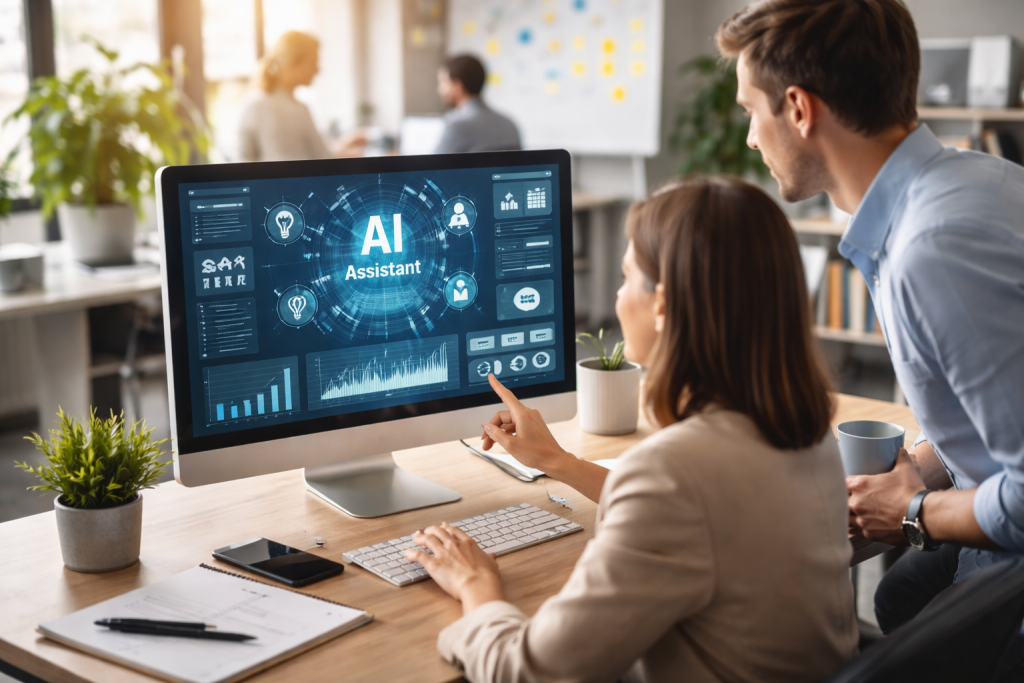
The integration of AI into office environments represents a significant technological leap. Early office automation focused on basic functions, like word processing and spreadsheets. AI tools move beyond these foundational elements, introducing capabilities that mimic human intelligence at scale. Advancements in machine learning, natural language processing (NLP), and data analytics drive this evolution.
From Automation to Augmentation
Historically, automation aimed to replace repetitive manual tasks. AI, however, frequently augments human capabilities. Consider a financial analyst. Instead of manually sifting through thousands of reports, an AI can process and summarize key trends, allowing the analyst to focus on strategic interpretation and decision-making. This partnership, where AI acts as a sophisticated assistant, is a hallmark of its current office application. It’s like providing a magnifying glass to see finer details, rather than replacing the eye itself.
Key AI Technologies at Play
Several AI technologies underpin this transformation. Machine learning algorithms enable systems to learn from data and improve performance over time. NLP allows computers to understand, interpret, and generate human language, making tools like intelligent chatbots and automated report generation possible. Computer vision aids in tasks like document scanning and data extraction. These technologies, working in concert, form the backbone of modern AI office tools.
AI tools are increasingly used to optimize office workflows. They reduce manual effort, minimize errors, and accelerate processes, freeing employees to concentrate on more complex and creative tasks. Similar to a well-functioning machine, AI facilitates seamless office processes.
Automating Repetitive Tasks
Many office roles involve repetitive, high-volume tasks. AI can handle these with accuracy and speed. For instance, data entry, email categorization, and scheduling appointments can all be automated. Robotic Process Automation (RPA), a subset of AI, is particularly effective here, deploying software robots to interact with applications and databases, mirroring human actions. This removes the drudgery from work, allowing human minds to pursue more engaging problems.
Enhancing Document Management
The sheer volume of documents in an office can be overwhelming. AI tools centralize, categorize, and retrieve information efficiently. Optical Character Recognition (OCR) with AI capabilities allows systems to extract data from scanned documents, regardless of format. Intelligent search functions enable employees to locate specific information across vast document repositories quickly. This is like having a perfectly indexed library where every book is instantly available.
Facilitating Communication and Collaboration
AI-powered tools improve internal and external communication. Chatbots can answer frequently asked questions, reducing the burden on customer service or IT support. AI can also analyze communication patterns, suggesting optimal times for meetings or identifying key discussion points in lengthy email threads. Project management tools with AI integration can automatically update task statuses or highlight potential bottlenecks, promoting smoother collaboration.
Beyond streamlining tasks, AI significantly boosts overall productivity and refines decision-making processes. It acts as a compass, guiding towards better choices by illuminating the terrain of data.
Predictive Analytics for Business Insights
AI’s ability to analyze large datasets enables predictive analytics. Businesses can forecast sales trends, identify potential risks, or anticipate customer needs with greater accuracy. This proactive approach allows for informed strategic planning, moving organizations from reactive problem-solving to proactive opportunity seizing.
Personalized Recommendations and Insights
AI engines can offer personalized recommendations to employees. For a marketing team, AI might suggest optimal campaign strategies based on past performance and current market data. For a sales team, it could identify high-potential leads. These tailored insights empower individuals to make more effective choices.
Improving Data-Driven Decision Making
AI helps organizations move beyond gut feelings to data-driven decisions. By processing and interpreting complex information, AI platforms present insights in an understandable format. This allows leaders to weigh options based on evidence, leading to more robust and reliable outcomes. It’s like having x-ray vision into the underlying structure of a problem.
Effective time management and task prioritization are critical for productivity. AI tools offer solutions that help individuals and teams manage their time more effectively and focus on high-impact activities.
Intelligent Scheduling and Calendar Management
AI-powered scheduling tools can intelligently manage calendars, finding optimal meeting times across multiple participants, considering time zones, availability, and even travel time. They can also send automated reminders and reschedule conflicts, reducing the administrative overhead of meeting coordination.
Prioritizing Tasks with AI Assistance
AI can analyze task lists, deadlines, and dependencies to suggest optimal prioritization. Project management platforms often incorporate AI to identify critical path tasks or flag overdue items that could derail overall progress. This helps individuals and teams allocate their energy to what truly matters.
Monitoring and Optimizing Workflows
AI tools can monitor workflow patterns, identifying bottlenecks or inefficiencies. For example, by analyzing the time taken for various stages in a sales pipeline, AI can highlight areas where rework is frequent or where processes introduce delays. This provides actionable data for continuous improvement, much like a meticulous quality control inspector.
While the benefits of AI in the office are clear, its adoption presents challenges. Addressing these is crucial for realizing AI’s full potential and shaping the future of work.
Overcoming Implementation Hurdles
Integrating new AI tools into existing office infrastructure can be complex. Issues include data compatibility, integration with legacy systems, and the need for specialized technical expertise. Organizations must approach AI implementation as a strategic project, with clear objectives and a well-defined roadmap.
Data Security and Privacy Concerns
AI systems rely heavily on data. Ensuring the security and privacy of this data is paramount. Organizations must implement robust data governance policies, adhere to regulations like GDPR, and use secure AI platforms to protect sensitive information. Trust is the foundation upon which AI’s value is built.
The Human Element: Training and Adoption
One of the most significant challenges is ensuring that employees are willing and able to use AI tools effectively. This requires comprehensive training, clear communication about the benefits, and addressing potential anxieties about job displacement. The goal is to empower employees with AI, not replace them.
Ethical Considerations
As AI becomes more sophisticated, ethical considerations become more pressing. Bias in algorithms, accountability for AI-driven decisions, and transparency in how AI operates are all critical concerns that organizations must address as part of their AI strategy. These are not merely technical problems, but societal ones.
The Evolving Landscape of Office Work
The future office will likely see AI seamlessly integrated into daily operations. This will free up human capacity for creativity, problem-solving, and interpersonal connection. Office workers will increasingly collaborate with AI, leveraging its analytical power to enhance their own cognitive abilities. Organizations that embrace AI strategically will be better positioned to adapt to a rapidly changing business environment, navigating the future with a keen sense of direction.
FAQs
1. What are AI tools, and how are they revolutionizing office work?
AI tools are software applications that use artificial intelligence to automate tasks, analyze data, provide insights, and make decisions. In the office, AI tools are revolutionizing work by streamlining workflow, enhancing productivity, and improving decision-making through automation and data analysis.
2. How can AI tools enhance productivity and efficiency in the office?
AI tools can enhance productivity and efficiency in the office by automating repetitive tasks, providing insights from data analysis, prioritizing tasks, and streamlining workflow. This allows employees to focus on more strategic and high-value work, ultimately increasing overall productivity.
3. What impact does AI have on time management and decision-making in the office?
AI tools can impact time management in the office by automating time-consuming tasks, prioritizing work, and providing insights to help employees make more informed decisions. This allows for better allocation of time and resources, leading to improved decision-making and overall efficiency.
4. What are the challenges in adopting AI tools in the office, and how can they be overcome?
Challenges in adopting AI tools in the office may include resistance to change, lack of understanding of AI technology, and concerns about job displacement. These challenges can be overcome through proper training and education, clear communication about the benefits of AI tools, and a focus on how AI can augment, rather than replace, human work.
5. What does the future of office work look like with AI integration?
The future of office work with AI integration is likely to involve even greater automation, data-driven decision-making, and seamless integration of AI tools into everyday work processes. This will lead to increased efficiency, improved productivity, and the ability for employees to focus on more strategic and creative tasks.

Sarah Khan is a technology enthusiast and the admin of ProTechTuto. Her goal is to provide clear, practical, and easy-to-understand tech guides for beginners, helping them build strong digital skills with confidence.