Mastering the Art of Digital Organization: A Guide to Properly Organizing Files and Folders on Your Computer
Digital clutter is a prevalent issue in modern computing, hindering efficiency and causing frustration. This guide outlines strategies for effective digital organization, transforming a chaotic digital environment into a streamlined system. Understanding and implementing these principles can significantly improve productivity and reduce time spent searching for misplaced information.
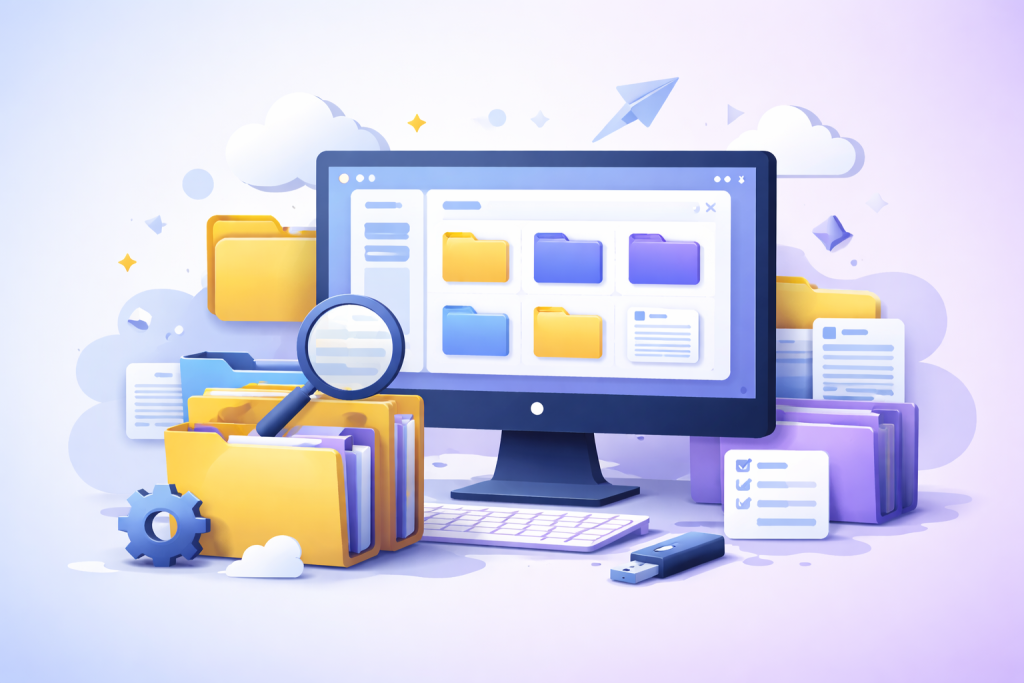
Effective digital organization begins with understanding its benefits and establishing a robust system. Just as a well-stocked library allows for easy retrieval of books, a well-organized digital space ensures information is readily accessible.
Contents
- 0.1 Why Digital Organization Matters
- 0.2 Building Your Organizational Framework
- 0.3 Crafting Effective File Names
- 0.4 Categorizing for Efficient Retrieval
- 0.5 Leveraging Search Capabilities
- 0.6 Utilizing File Management Software
- 0.7 Smart Folder and Tagging Systems
- 0.8 Desktop and Workspace Management
- 0.9 Regular Cleanup and Archiving
- 0.10 Backing Up Important Information
- 0.11 Consistent System Maintenance
- 0.12 Sharing Files Effectively
- 0.13 Common Digital Organization Challenges
- 0.14 Troubleshooting and Adaptation
- 1 FAQs
- 1.1 1. Why is digital organization important?
- 1.2 2. How can I create a system for organizing my files and folders?
- 1.3 3. What are some tips for naming and categorizing files effectively?
- 1.4 4. What are some file management tools and software that can help with digital organization?
- 1.5 5. How can I effectively back up and archive important files?
Why Digital Organization Matters
Digital organization is crucial for several reasons. It improves efficiency, making it faster to locate specific files. It reduces stress, eliminating the frustration of lost documents. Furthermore, it enhances data security by making it easier to manage backups and identify important information. In a professional context, a well-organized digital presence projects competence and reliability.
Building Your Organizational Framework
Establishing a clear, logical structure is paramount. This involves creating a hierarchy of folders that reflects your workflow and information types. Think of it as constructing a building; a strong foundation leads to a stable structure. Begin with broad categories and refine them into more specific subfolders. For example, a top-level “Projects” folder might contain subfolders for “Current,” “Completed,” and “Archived.” Within “Current,” further subfolders could define individual projects.
The core of digital organization lies in how files are named, categorized, and made discoverable. Consistent application of these principles is key.
Crafting Effective File Names
File names should be descriptive and consistent. Avoid generic names like “document1.docx” or “image.jpg.” Instead, incorporate key information such as the date, project name, or content type. For instance, “2023-10-27_ProjectX_Report_DraftA.pdf” is far more informative than “report.pdf.”
Consider using a consistent naming convention throughout your system. This might include a date format (YYYY-MM-DD), followed by a brief description, and then a version number. This predictability acts as a mental shortcut when searching for files.
Categorizing for Efficient Retrieval
File categorization involves placing files into appropriate folders based on their content and purpose. This is where the hierarchical folder structure comes into play. A document detailing meeting minutes for Project Alpha would reside in ‘Projects > Current > Project Alpha > Meetings’. This categorical placement acts like a signpost, guiding you directly to the relevant information.
Consider attributes beyond just the topic. Categorize by date, status (e.g., “Draft,” “Final”), or recipient if relevant. Overlapping categories can sometimes occur; choose the most dominant category for primary placement and use search tools for secondary attributes.
Leveraging Search Capabilities
Modern operating systems provide powerful search functionalities. Understanding how to use these tools is an essential part of digital organization. Instead of manually navigating through layers of folders, you can often find a file much faster by using keywords from its name or content.
Learn to use advanced search operators such as wildcards, file type filters, and date ranges. This transforms the search bar from a simple query tool into a precision instrument, allowing you to pinpoint specific documents within a vast digital landscape.
Efficient digital organization is often augmented by specialized tools and practices. These range from integrated system features to dedicated software.
Utilizing File Management Software
While operating systems offer built-in file management, dedicated software can provide enhanced features. These often include advanced search filters, tagging capabilities, duplicate file finders, and intelligent sorting options. Examples include commercial file managers or open-source alternatives that offer more granular control over file attributes and metadata.
Consider software that integrates with cloud storage services, creating a unified interface for both local and remote files. This streamlines operations across different storage locations and devices.
Smart Folder and Tagging Systems
Many operating systems and applications allow for “smart folders” or “saved searches” that automatically collect files based on predefined criteria. For example, a smart folder might display all documents modified in the last week, or all files containing a specific keyword. This dynamic organization reduces the need for manual sorting.
Tagging is another powerful organizational tool. Instead of relying solely on folder hierarchy, you can assign multiple descriptive tags to files. A report might be tagged “Project Alpha,” “Financial,” and “October 2023 Meeting.” This allows for cross-categorization and flexible retrieval that a strict folder structure cannot always provide.
A well-organized digital space requires ongoing attention. Sustained effort prevents the accumulation of clutter and ensures the system remains effective.
Desktop and Workspace Management
The desktop is often the first point of digital interaction and can quickly become a dumping ground. Treat your desktop as a temporary holding area, not a permanent storage solution. Regularly move files from your desktop into their designated folders.
Consider using a minimalist desktop approach, keeping only essential shortcuts or items you are actively working on. This reduces visual clutter and makes it easier to focus. Organize icons into logical groups if you prefer having multiple shortcuts.
Regular Cleanup and Archiving
Digital accumulation is inevitable. Schedule regular cleanup sessions to delete unnecessary files, old downloads, and redundant copies. This process is akin to regular house cleaning; it prevents debris from piling up.
Archiving involves moving older, less frequently accessed files to a separate storage location. This keeps your active workspace lean and efficient while still preserving data. Archived files could be moved to an external hard drive, a dedicated “Archive” folder, or a cloud storage tier designed for less active data. Clearly label archived folders with dates or project names to ensure future retrievability.
Backing Up Important Information
A digital organization is incomplete without a robust backup strategy. Accidents, hardware failures, or cyber-attacks can lead to data loss. Regular backups act as an insurance policy for your digital assets.
Implement the “3-2-1 rule”: three copies of your data, on two different media types, with one copy offsite. This might involve a local backup drive, a cloud storage service, and possibly a second off-site physical drive. Automate backups where possible to ensure consistency and reduce the risk of human error.
Consistent System Maintenance
The effectiveness of any organizational system depends on consistent application. Once you establish your folder structure and naming conventions, adhere to them. Deviations introduce inconsistencies that can undermine the entire system.
Periodically review your system. As your projects, roles, or interests evolve, your organizational needs may change. Be prepared to adapt and refine your structure to reflect these shifts. This iterative process ensures your digital organization remains relevant and efficient over time.
Digital organization extends beyond individual use, impacting collaborative efforts and presenting common challenges.
Sharing Files Effectively
When collaborating, a shared understanding of organizational principles is vital. Establish clear guidelines for file naming, folder structures, and version control within a team. Use shared platforms like cloud storage or project management software that support these conventions.
Centralized document storage and version control prevent multiple, conflicting copies of files. This acts like a shared workbench where everyone knows where to find the correct tools and ongoing projects. Communicate any changes to the organizational structure to all collaborators to maintain consistency.
Common Digital Organization Challenges
Users often encounter several hurdles. One is resistance to change; adopting a new system requires effort. Begin with small, manageable steps to build momentum.
Another challenge is “hoarding” – keeping every file “just in case.” Develop a clear deletion policy or an archiving strategy for less critical items. Overly complex systems can also be counterproductive. Strive for simplicity and practicality. If a system is too cumbersome, it will not be maintained.
Troubleshooting and Adaptation
When old habits resurface or the system breaks down, diagnose the root cause. Are the naming conventions too difficult to remember? Is the folder structure too deep? Adjust the system as needed. Digital organization is not a static state but an ongoing process of refinement.
Seek feedback from others if you are part of a team. What works for one person might not work for another. Flexibility and a willingness to adapt are crucial for long-term success. The goal is a system that supports your work, not one that adds to it.
FAQs
1. Why is digital organization important?
Digital organization is important because it helps individuals and businesses to efficiently manage and locate files, improve productivity, reduce clutter, and ensure that important information is easily accessible and secure.
2. How can I create a system for organizing my files and folders?
To create a system for organizing files and folders, you can start by categorizing your files into broad categories, then creating subfolders within each category. It’s important to use consistent naming conventions and to regularly review and update your organizational system.
3. What are some tips for naming and categorizing files effectively?
Some tips for naming and categorizing files effectively include using clear and descriptive file names, organizing files into logical folders, avoiding special characters and spaces in file names, and using dates or version numbers for easy tracking.
4. What are some file management tools and software that can help with digital organization?
There are various file management tools and software available, such as Dropbox, Google Drive, Microsoft OneDrive, and Evernote, that can help with digital organization by providing cloud storage, file syncing, and collaboration features.
5. How can I effectively back up and archive important files?
To effectively back up and archive important files, you can use external hard drives, cloud storage services, or backup software to create regular backups of your files. It’s important to establish a regular schedule for backing up and archiving files to prevent data loss.

Sarah Khan is a technology enthusiast and the admin of ProTechTuto. Her goal is to provide clear, practical, and easy-to-understand tech guides for beginners, helping them build strong digital skills with confidence.