
Protecting Your Online Presence: Understanding the Role of SSL in Website Security
Website security is a critical aspect of maintaining an online presence. As businesses and individuals increasingly rely on the internet for communication, commerce, and information sharing, safeguarding sensitive data becomes paramount. A robust security infrastructure protects against various threats, including data breaches, identity theft, and reputational damage.
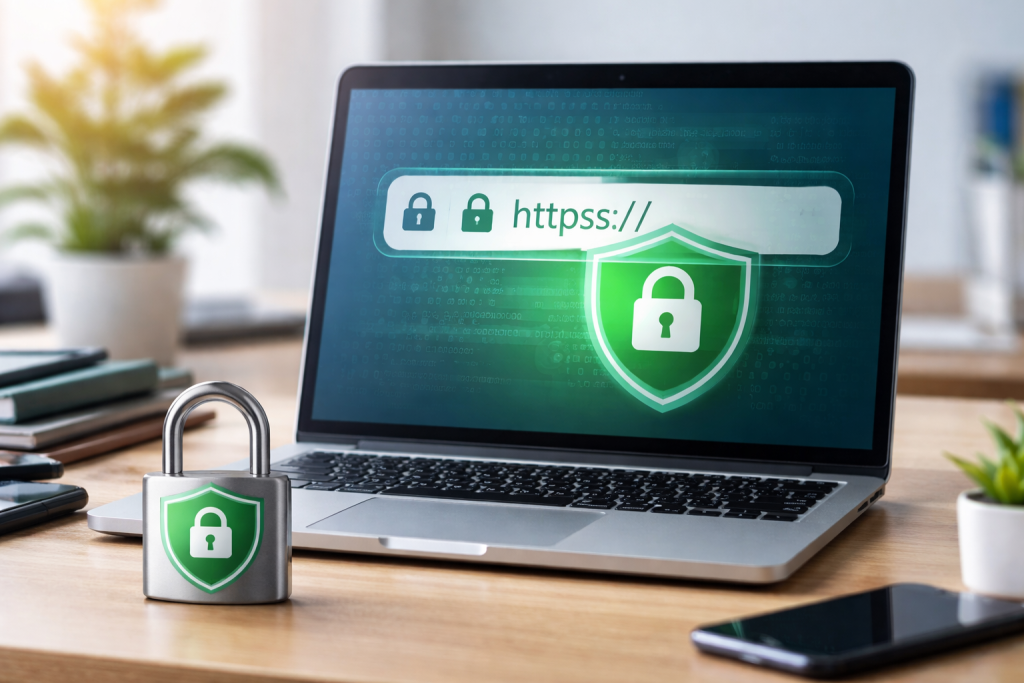
A website is often the first place that customers, partners, and the general public go to in today’s digital world. Its security directly influences user perception and trust. Beyond user experience, a compromised website can lead to significant financial losses, legal repercussions, and a permanent erosion of brand credibility. Think of your website as a digital storefront. Just as you would secure a physical store with locks and security cameras to prevent theft and vandalism, your website requires similar protective measures to deter malicious actors.
Contents
- 0.1 Protecting Sensitive User Information
- 0.2 Preventing Website Defacement and Disruption
- 0.3 Maintaining Regulatory Compliance
- 0.4 Safeguarding Business Operations and Reputation
- 0.5 The Mechanics of SSL Encryption
- 0.6 The Visual Cues of SSL Security
- 0.7 Confidentiality: Keeping Data Private
- 0.8 Integrity: Ensuring Data Remains Unaltered
- 0.9 Authentication: Verifying Website Identity
- 0.10 Building Confidence in Online Transactions
- 0.11 Enhancing Brand Credibility
- 0.12 Reducing Perceived Risk for Visitors
- 0.13 Domain Validated (DV) Certificates
- 0.14 Organization Validated (OV) Certificates
- 0.15 Extended Validation (EV) Certificates
- 0.16 Wildcard and Multi-Domain Certificates
- 0.17 Misconception: SSL Makes a Website Invincible
- 0.18 Misconception: All SSL Certificates Offer the Same Level of Security
- 0.19 Misconception: SSL is Expensive and Complex to Implement
- 0.20 Keep Software and Plugins Updated
- 0.21 Implement Strong Passwords and User Access Controls
- 0.22 Regularly Back Up Your Website
- 0.23 Monitor Your Website for Suspicious Activity
- 1 FAQs
Protecting Sensitive User Information
When users interact with a website, they often provide personal and financial information. This can include names, addresses, credit card numbers, and login credentials. Without proper security, this data is vulnerable to interception by attackers who could exploit it for fraudulent purposes. A secure website ensures that this sensitive information is protected during transmission and storage.
Preventing Website Defacement and Disruption
Malicious actors can deface websites, replacing legitimate content with offensive material or propaganda. They can also disrupt a website’s functionality through denial-of-service (DoS) attacks, making it inaccessible to legitimate users. These disruptions not only frustrate users but can also halt business operations, leading to lost revenue and customer dissatisfaction.
Maintaining Regulatory Compliance
Many industries are subject to regulations that govern the handling of sensitive data. For instance, the General Data Protection Regulation (GDPR) in Europe and the California Consumer Privacy Act (CCPA) in the United States impose strict requirements on how personal data is collected, processed, and protected. Implementing strong security measures, including SSL, is often a prerequisite for complying with these regulations and avoiding hefty fines and legal penalties.
Safeguarding Business Operations and Reputation
A security breach can have far-reaching consequences for a business. Beyond the immediate financial costs of recovery and remediation, a breach can severely damage a company’s reputation. Customers may lose confidence in the organization’s ability to protect their data, leading them to take their business elsewhere. This loss of trust can be very difficult to regain.
SSL, which stands for Secure Sockets Layer, is a standard security technology that enables encrypted communication between a web server and a web browser. It creates a secure connection, ensuring that any data exchanged between the two remains private and integral. Think of SSL as a secure tunnel through which your sensitive data travels. Without it, data would be like an unsecured package sent through the open air, visible to anyone who might intercept it.
The Mechanics of SSL Encryption
When a user attempts to visit a website secured with SSL, their browser initiates a handshake with the web server. This process involves the server presenting its SSL certificate to the browser. The browser then verifies the certificate’s authenticity and validity with the issuing Certificate Authority (CA). If the validation is successful, the browser and server establish a secure, encrypted connection using algorithms that scramble the data, making it unreadable to anyone who might intercept it.
The SSL Handshake: A Secure Negotiation
The SSL handshake is a multi-step process where the browser and server agree on the encryption methods and security keys to be used for the session. This negotiation ensures that both parties are using compatible security protocols.
Certificates: The Digital Identity Cards
Every SSL certificate contains a public key, the website owner’s identity information, and the issuing Certificate Authority’s digital signature. This information allows browsers to verify that the website is legitimate and that the connection is truly with the intended server.
Encryption: Scrambling Data for Privacy
Once the handshake is complete, all data exchanged between the browser and server is encrypted. This means any information, such as login details or credit card numbers, is transformed into an unreadable string of characters, protecting it from eavesdroppers.
The Visual Cues of SSL Security
Users can readily identify websites secured with SSL. Typically, a padlock icon appears in the browser’s address bar, signifying a secure connection. For websites using Extended Validation (EV) SSL certificates, the company name may also be displayed in green in the address bar, offering an additional layer of visual assurance.
The Padlock Icon: A Universal Symbol of Trust
The presence of the padlock icon is a globally recognized indicator that a website is using SSL and that the connection is secure. It’s a quick visual cue for users to gauge the safety of a website.
HTTPS: The Secure Protocol
Websites secured with SSL use the Hypertext Transfer Protocol Secure (HTTPS) instead of the standard HTTP. The S’ in HTTPS signifies the secure layer provided by SSL, indicating that the communication is encrypted.
SSL’s primary function is to create a secure channel for data transmission, preventing unauthorized access and manipulation. This encryption acts as a shield, protecting sensitive information as it travels across the internet.
Confidentiality: Keeping Data Private
The encryption provided by SSL ensures that data exchanged between a user’s browser and the website’s server remains confidential. Even if an attacker intercepts the data, it will appear as random characters and be impossible to decipher without the correct decryption key. This is akin to sending a secret message written in a cipher that only the intended recipient knows how to decode.
Integrity: Ensuring Data Remains Unaltered
Beyond confidentiality, SSL also ensures data integrity. It verifies that the data transmitted has not been tampered with or altered during transmission. Any modification to the data will be detected, and the connection will be terminated, preventing the use of corrupted or malicious data. Imagine an order form being sent to a supplier. SSL ensures that the details of the order remain exactly as the customer intended, preventing any changes that could lead to incorrect shipments or billing.
Authentication: Verifying Website Identity
SSL certificates authenticate the identity of the website. By verifying the certificate against trusted Certificate Authorities, users can be confident that they are connecting to the legitimate website and not a fraudulent imposter. This is crucial for preventing phishing attacks, where attackers create fake websites that mimic legitimate ones to steal user credentials. If you’re expecting a letter from your bank, SSL ensures you’re not accidentally opening a look-alike letter from an unknown sender.
In the digital realm, trust is a currency that is hard-earned and easily lost. SSL plays a significant role in building and maintaining this trust by assuring visitors that their online interactions are safe.
Building Confidence in Online Transactions
For e-commerce businesses, SSL is non-negotiable. When customers are asked to enter payment information, the presence of SSL and the accompanying visual cues (padlock, HTTPS) provide the necessary reassurance that their financial data is protected. This confidence directly translates into fewer abandoned carts and increased conversion rates. A customer is more likely to share their credit card details if they see a digital vault protecting the transaction.
Enhancing Brand Credibility
A website that displays SSL security signals professionalism and a commitment to customer safety. It demonstrates that the business takes its security responsibilities seriously, which can differentiate it from competitors who may not have the same level of protection. This perceived trustworthiness can significantly enhance a brand’s overall credibility.
Reducing Perceived Risk for Visitors
Users are increasingly aware of online security threats. When they encounter a website without SSL, they may hesitate to engage further, especially if sensitive information is requested. The absence of SSL can be a significant deterrent, leading to lost opportunities. By implementing SSL, businesses proactively reduce the perceived risk for their visitors, encouraging them to interact more freely and confidently.
Selecting the right SSL certificate depends on a website’s specific needs and the level of validation required. Different types of certificates offer varying degrees of assurance and features.
Domain Validated (DV) Certificates
DV certificates are the most basic type. They primarily validate that the applicant owns the domain name. Validation is typically automated and quick. These are suitable for websites where the primary concern is encrypting data in transit, such as blogs or informational sites that don’t handle sensitive transactions.
Simplicity and Speed of Issuance
DV certificates are simple to obtain and are often issued within minutes. They offer basic encryption but do not provide as high a level of identity verification as other certificate types.
Best Use Cases: Informational Websites
These certificates are ideal for websites where the primary goal is to secure basic data transfer and signal a measure of security to visitors, but where detailed identity verification is not a critical requirement.
Organization Validated (OV) Certificates
OV certificates require a more thorough validation process, where the organization’s identity and physical existence are verified by the Certificate Authority. This offers a higher level of trust than DV certificates, as it confirms that the website belongs to a legitimate, registered organization.
Enhanced Identity Verification
OV certificates provide a greater degree of assurance about the owner of the website. The validation process involves checking organizational records, making it more difficult for imposter sites to obtain these certificates.
Ideal for Businesses Handling Sensitive Information
These certificates are well-suited for businesses that handle customer data, conduct e-commerce, or require a stronger demonstration of legitimacy to their users.
Extended Validation (EV) Certificates
EV certificates provide the highest level of validation. They involve a rigorous verification process of the organization’s legal, physical, and operational existence. Websites with EV certificates typically display the organization’s name prominently in the browser’s address bar, often in green, offering maximum visual assurance to users.
The Gold Standard for Trust and Assurance
EV certificates go through the most stringent vetting process, ensuring the highest level of trust. The prominent display of the organization’s name in the address bar serves as a clear indicator of authenticity.
Premium Security for High-Transaction Websites
These are recommended for financial institutions, large e-commerce sites, and any organization where complete confidence in identity is paramount for users.
Wildcard and Multi-Domain Certificates
Wildcard certificates secure a domain and all of its subdomains (e.g., *.example.com). Multi-domain certificates (also known as Subject Alternative Name or SAN certificates) can secure multiple distinct domain names with a single certificate. These are useful for organizations managing multiple websites or subdomains that require SSL protection.
Securing Multiple Subdomains with One Certificate
Wildcard certificates simplify management by allowing a single certificate to protect a main domain and all its subdomains, saving time and resources.
Consolidating Security for Diverse Online Assets
Multi-domain certificates offer flexibility by allowing administrators to secure various websites, including those with different domain names, under a single SSL certificate.
Despite its widespread adoption, several myths and misunderstandings surround SSL and its role in website security. Clarifying these can lead to a more accurate understanding of its capabilities and limitations.
Misconception: SSL Makes a Website Invincible
SSL encrypts data in transit and verifies website identity, but it does not protect against all security threats. It does not prevent malware infections, phishing attacks that trick users into divulging credentials, or weak password practices. Think of SSL as a strong lock on your front door, but it won’t stop someone from breaking a window.
SSL Secures Data in Transit, Not All Vulnerabilities
It’s important to remember that SSL’s primary function is to secure the connection between the browser and server. It does not inherently protect against vulnerabilities within the website’s code or server infrastructure itself.
Layered Security is Essential
A truly secure online presence requires a multi-faceted approach, including regular software updates, strong access controls, and user education, in addition to SSL.
Misconception: All SSL Certificates Offer the Same Level of Security
As discussed with DV, OV, and EV certificates, the level of identity assurance varies significantly. While all valid SSL certificates provide encryption, the trust conveyed by an EV certificate is far greater than that of a basic DV certificate. Choosing the correct type based on your needs is vital.
Different Validation Levels Provide Varying Trust
The choice of SSL certificate directly impacts the level of trust a user can place in the website’s authenticity. This difference is crucial for businesses interacting with sensitive customer data.
Matching Certificate Type to Website Requirements
Understanding the nuances between DV, OV, and EV certificates ensures that you select a solution that adequately meets your website’s security and trust-building objectives.
Misconception: SSL is Expensive and Complex to Implement
While enterprise-level EV certificates can represent a significant investment, basic DV certificates are often available for free or at a low cost from various Certificate Authorities and hosting providers. The installation process has also become much more streamlined over the years, with many hosting platforms offering automated setup.
Affordable Options and Streamlined Installation
The perception of high cost and complexity is often outdated. Free SSL certificates are widely available, and installation is significantly easier than in the past, often with one-click solutions.
Accessibility for Websites of All Sizes
From small personal blogs to large corporate sites, there are SSL solutions available to fit every budget and technical expertise level.
Implementing SSL is a crucial step, but maintaining a secure online presence is an ongoing process that involves a combination of technical measures and vigilant practices.
Keep Software and Plugins Updated
Regularly updating your website’s content management system (CMS), themes, and plugins is essential. Updates often include security patches that address newly discovered vulnerabilities. Outdated software is like an unlocked door, inviting potential intruders.
Patching Vulnerabilities to Prevent Exploits
Software vulnerabilities are common entry points for attackers. Keeping all components of your website up-to-date ensures that these known weaknesses are addressed.
Relying on Reputable Sources for Software
Always download themes and plugins from trusted sources to avoid introducing malicious code into your website.
Implement Strong Passwords and User Access Controls
Utilize strong, unique passwords for all accounts associated with your website, including CMS logins, FTP access, and database credentials. Employ multi-factor authentication (MFA) whenever possible. Limiting user access to only what is necessary further reduces the attack surface.
Strong passwords act as a robust barrier against brute-force attacks and unauthorized logins. Using a password manager can help generate and store complex, unique passwords.
Granular Permissions for Enhanced Security
Granting users only the minimum permissions required for their roles minimizes the potential damage if an account is compromised.
Regularly Back Up Your Website
Maintain regular, comprehensive backups of your website’s files and database. Store these backups securely in an off-site location. In the event of a security incident or data loss, backups are your lifeline for quickly restoring your website to its previous state.
A Crucial Recovery Mechanism
Website backups serve as an insurance policy against data loss, whether caused by a security breach, hardware failure, or human error.
Testing Backups for Reliability
Periodically test your backup restoration process to ensure that the backups are valid and can be successfully restored when needed.
Monitor Your Website for Suspicious Activity
Implement website monitoring tools to detect unusual activity, such as sudden spikes in traffic, unauthorized file modifications, or failed login attempts. Early detection of suspicious behavior can allow you to respond quickly and mitigate potential damage.
Proactive Threat Detection
Continuous monitoring helps identify potential security breaches in their early stages, enabling a swift and effective response before significant harm occurs.
Utilizing Security Scanning Tools
Regularly scan your website for malware, vulnerabilities, and other security threats using reputable security scanning tools.
FAQs
1. What is SSL, and how does it work?
SSL stands for Secure Sockets Layer, and it is a standard security protocol for establishing encrypted links between a web server and a browser. This ensures that all data passed between the web server and browsers remain private and integral. SSL works by using a cryptographic system that uses two keys to encrypt data—a public key known to everyone and a private or secret key known only to the recipient of the message.
2. How SSL Protects Your Online Data
SSL protects your online data by encrypting the information that is transmitted between a user’s browser and the website they are visiting. This encryption prevents hackers from intercepting and reading the data as it is transmitted over the internet. SSL also provides authentication, ensuring that the data is being sent to the intended server and not to a malicious third party.
3. The Role of SSL in Building Trust with Customers
SSL plays a crucial role in building trust with customers by providing a secure and safe environment for them to interact with a website. When customers see the padlock icon and “https” in the URL, they know that their data is being transmitted securely. This builds confidence in the website and encourages customers to share their personal and financial information.
4. Choosing the Right SSL Certificate for Your Website
When choosing an SSL certificate for your website, it’s important to consider the level of security and the specific needs of your website. There are different types of SSL certificates, including domain validation, organization validation, and extended validation certificates. It’s important to choose a certificate that meets your security needs and provides the appropriate level of validation for your website.
5. Best Practices for Maintaining a Secure Online Presence
Some best practices for maintaining a secure online presence include keeping your software and systems up to date, using strong and unique passwords, implementing multi-factor authentication, regularly backing up your data, and educating yourself and your team about potential security threats. It’s also important to regularly monitor your website for any security vulnerabilities and to invest in a reliable SSL certificate to protect your online data

Sarah Khan is a technology enthusiast and the admin of ProTechTuto. Her goal is to provide clear, practical, and easy-to-understand tech guides for beginners, helping them build strong digital skills with confidence.